THE ENIGMATIC CASTLE OF CHAVIN DE HUANTAR

This was one of the first and most important ceremonial centers of ancient Peru and a place of pilgrimage for many peoples who came to worship the Chavín god. Chavín art has a complex iconography, and there is much evidence of interactions between humans and animals in ceramics, sculpture, etc., reflecting how this civilization saw itself as connected to the other world. This civilization was also one of the first on the continent to use psychoactive plants in its rituals. The San Pedro cactus (wachuma) is frequently seen in their textiles, ceramics, and sculptures, depicted in the hands of humans during complex magical ceremonies.

This strange archaeological complex is composed of monumental architecture, made up of ceremonial plazas, superimposed terraces and, most notably, its intricate networks of underground galleries. They left us an extraordinary legacy of large and beautiful sculptures such as the "monolithic Lanzon", the "Raimondi Stele" and the mysterious "tenon heads" and it has an area of 15 hectares.

The ceremonial center of Chavín de Huántar is located in the Conchucos region, on the eastern side of the Cordillera Blanca mountain range, at the confluence of the Mosna and Huachecsa rivers, 3,150 meters above sea level, 434 kilometers north of Lima. It was discovered in 1919 by the Peruvian archaeologist Julio César Tello.

The legend that narrates the mythological origin of the Chavín culture tells of the following: "In the beginning, there was only smoke, and the land we now see with its mountains, ravines, and lagoons was formed from smoke. The people of that time lived hidden underground in subterranean galleries. From the depths of the earth emerged giant serpents that then transformed into red giants, naked and with large teeth, and after a great battle with other beings, they became humans, animals, and plants."


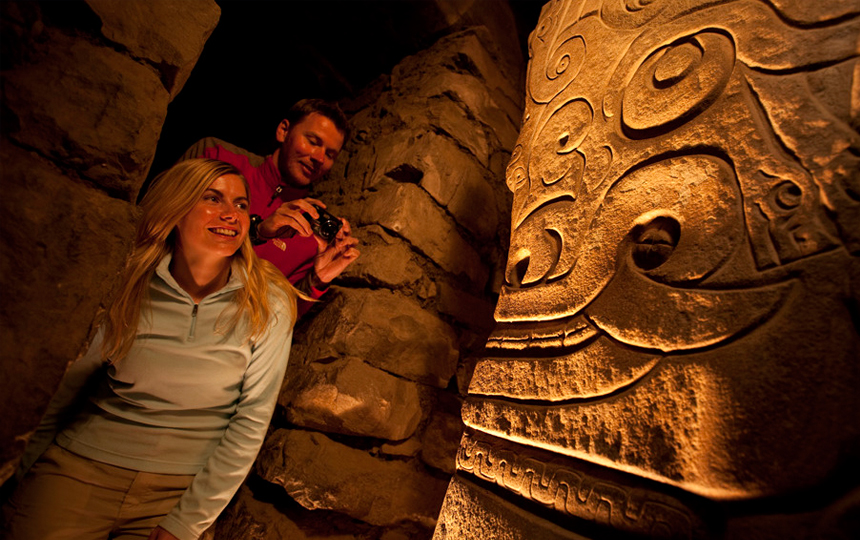
To get to this place we must first reach the city of Huaraz and then travel to the district of Chavin de Huantar located 109 kilometers away, in the Conchucos valley. But in addition to visiting this spectacular archaeological site, you can also visit the fabulous museum where you can appreciate many of the incredible findings that were made in the archaeological excavations.

Armando el cronista


Comentarios
Publicar un comentario