WALLED CITIES IN ANCIENT PERU?
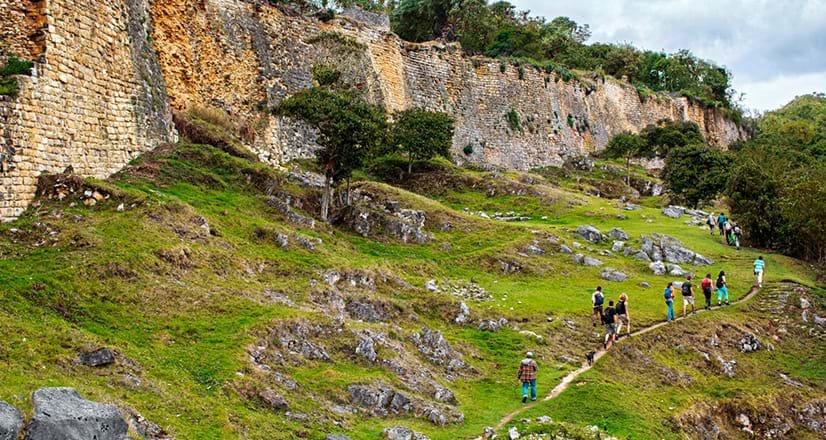
When you arrive at KUELAP, it seems like you're looking at a medieval European castle, and this leads us to wonder...were there castles in ancient Peru before the arrival of the Spanish? This enigmatic archaeological site is located in the province of Luya, in the Amazonas region of the northeastern Peruvian Andes, at an altitude of 3,000 meters, right in the town of TINGO, 1,300 kilometers north of Lima.
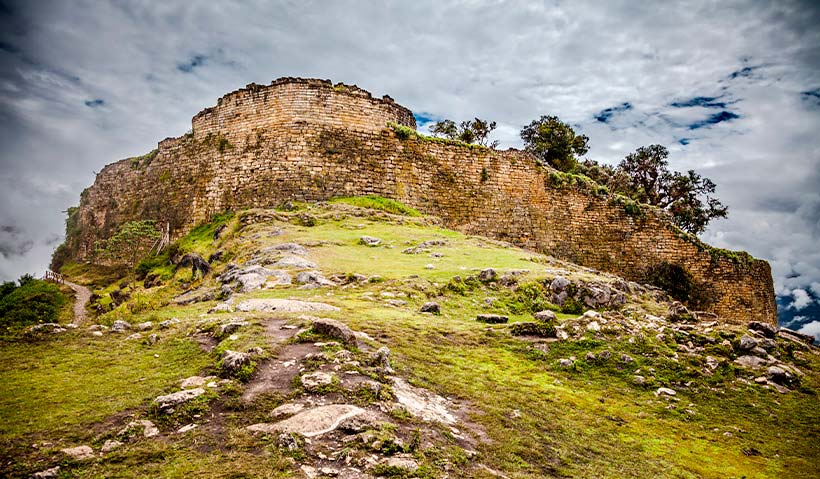
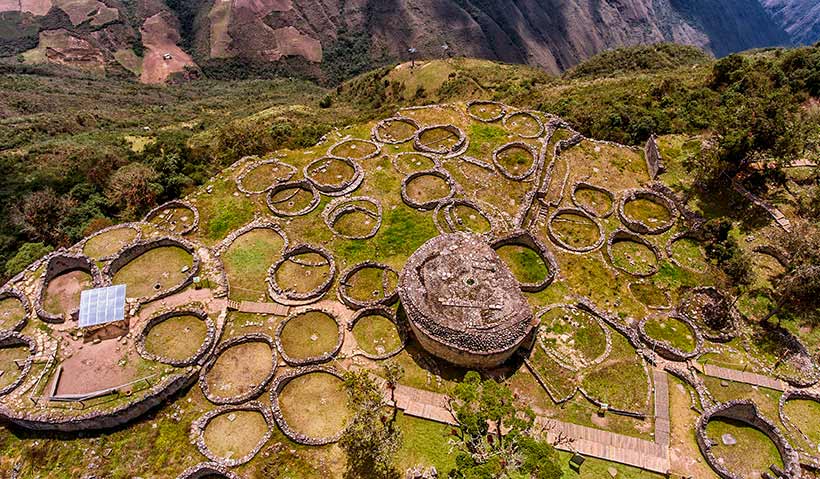
This mysterious fortress was built by the CHACHAPOYAS civilization on top of the "Barreta" mountain in the 11th century AD and was occupied until the 14th century. The area covered by this impressive pre-Inca structure is 6 hectares, the length of this fortress measures 600 meters and its imposing walls reach a height of 20 meters, it is estimated that only for the wall that gives access to this place 100,000 large stone blocks were used, the architectural layout of this citadel with its narrow streets, secret passageways and its 420 circular houses decorated with high relief friezes give us an idea that its builders had a high degree of architectural knowledge.
Kuelap was discovered on January 31, 1843 by Crisostomo Nieto. Other world-famous explorers who have visited Kuelap are the Frenchman Louis Langlois and the North American archaeologist Adolph Bandelier, but without a doubt the Peruvian archaeologist Federico Kaufman Doig is the one who has dedicated many years to the investigation of this mysterious and important pre-Hispanic site that amazes the world.
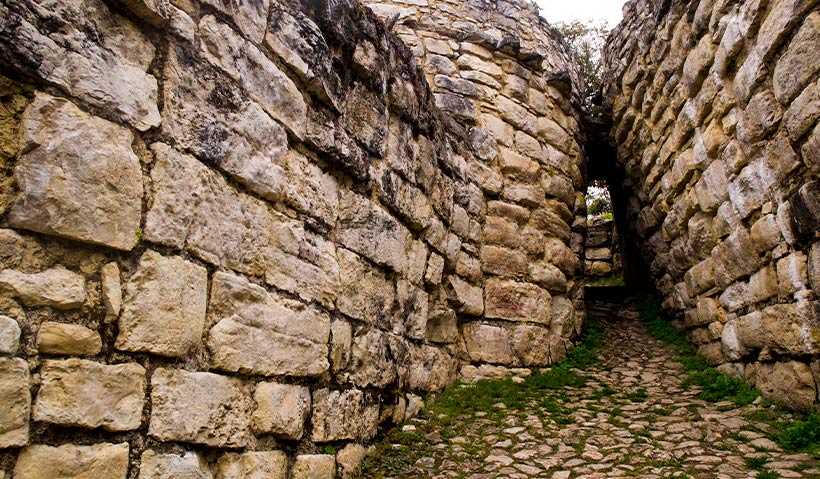
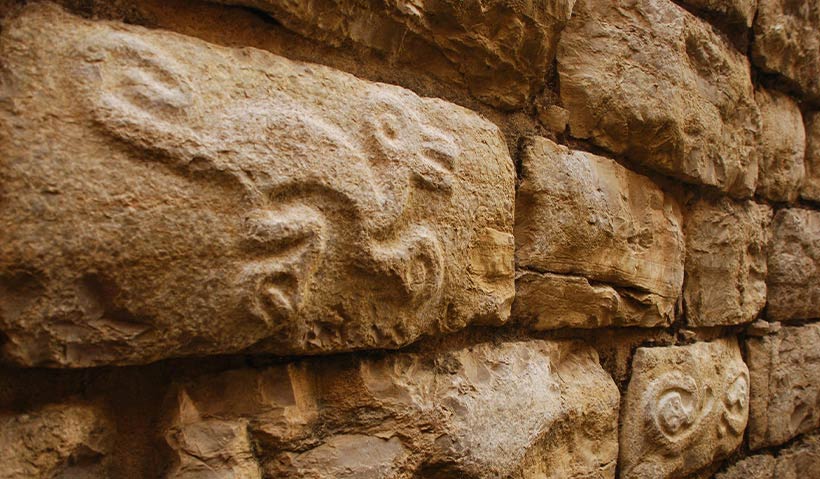
The architectural distribution of Kuelap is admirable and complex, highlighting the ACCESS which has a restricted and sacred character in the form of a funnel where as the visitor enters the passageway becomes narrower, the entrance passageway welcomes us with high relief reliefs of snakes, pumas and human faces, this access leads us to the upper part where the MAIN TEMPLE is located, which in its time was the most sacred building of this fortress where excavations found evidence of offerings left in the place that by their characteristics seem to have been brought from distant provinces such as Cajamarca, Ayacucho and the northern coast of Peru.

then a path leads us to the CIRCULAR PLATFORM and in Kuelap the houses where the ancient Chachapoyas lived were circular with conical roofs made of wood with vegetable fibers, another sector that had great importance is THE TOWER that stands out for its height and strategic location, built on the edge of a deep abyss and as in feudal castles it resembles a stone tower, other important sectors are: the upper town, the southern town, the Callancas etc.
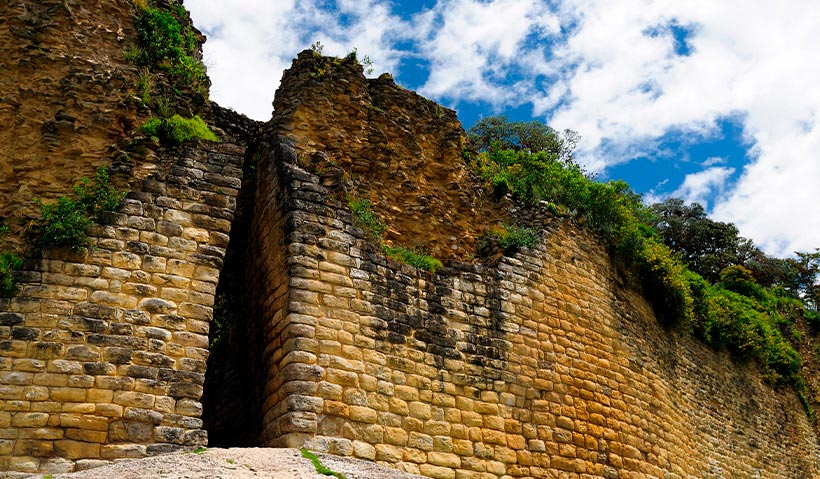
There are several hypotheses as to why the ancient CHACHAPOYAS civilization formed KUELAP. For many years, it has been considered that Kuelap was a fortress given its strategic location on the edge of an abyss and its high, sunny walls that surround it, but other archaeologists postulate that Kuelap could be an ancient walled city such as there were throughout Europe and that its great walls fulfilled a defensive function to protect the population from occasional enemies.
We cannot fail to mention that this prodigious walled city has had a CABLE CAR since March 2, 2017 from which the views of this place are incredible, to board this unique cable car we must go to the town of TINGO located 38 kilometers from Chachapoyas, it covers a distance of 4 kilometers and takes 20 minutes to reach its destination with a capacity for 8 passengers in each cabin, today the KUELAP CABLE CAR is the only cable car system that operates in Peru.


Comentarios
Publicar un comentario